
With so many moving parts on any project, it’s easy to make the living plants and trees an afterthought, but if you want to avoid eventual plant fails for your clients, a little knowledge and planning can go a long way in setting them up for long term success! Afterall, a tree that dies in a few months will not only discourage your client, but dying plants will only take away from the beauty of the spaces you’ve designed. We teamed up with plant expert, Danae Horst, for her expert take on successfully setting interior design clients up for plant success.
Before you add plants and large planters to your project plan, a few things to consider first:
LIGHT
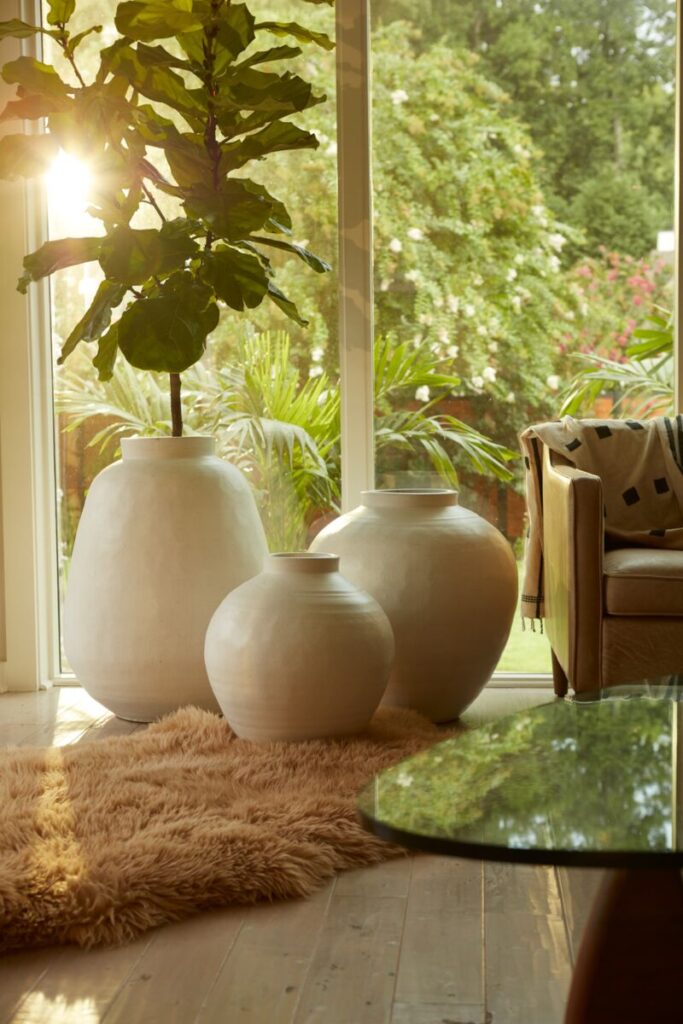
Problem: A consistent challenge I encounter when I work with interior designers is that rooms are often planned around a large plant with placement that doesn’t work for the plant’s needs. Trees especially need a lot of light, so placing them far from the nearest window, in rooms with small windows or windows that face north, or worst of all- in rooms with no natural light, is not going to support the tree’s long-term health.
Solution: When planning placement for large plants or trees, keep the needs of the plant in mind. Generally speaking, any indoor tree should be as close to a window with bright, filtered light as possible. Our eyes are good at making us think a room is brighter than it is, so think of a bright area as being within 2-3 feet of a window or skylight and in the path of the window (not around the corner, or 3 feet over in front of a wall). You’ll also want to make sure the window you choose is a match for the type of plant or tree you plan to use- a window that faces west will likely get way too much direct sun for many indoor plants unless it’s filtered by a lightweight curtain, while a window that faces north will not usually receive enough light for most large plants or trees.
DRAINAGE
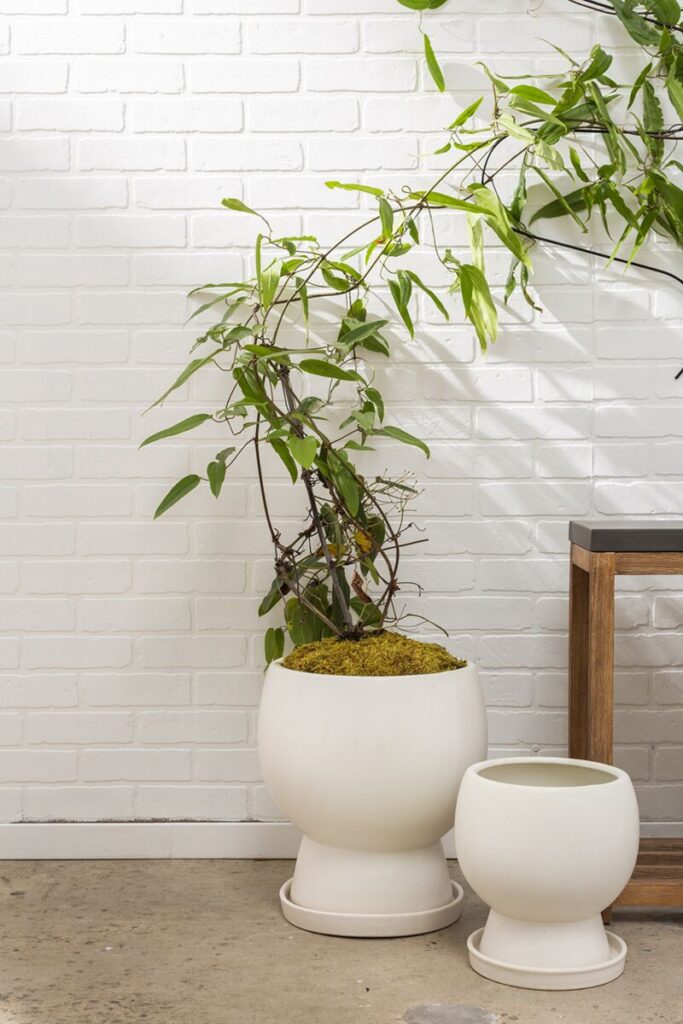
Problem: A frequent cause of eventual plant death is the lack of drainage in a container. Without a way for water to drain out of a pot, any excess water will just sit at the bottom (where the roots are), causing roots to die, and also attracting pests like fungus gnats. Contrary to what is often touted on the internet- adding rocks to the bottom of a container with no hole is not the solution to this issue either since it just raises the excess water closer to the roots of the plants.
Solution: To keep plants as healthy as possible, use one of these two methods to ensure proper drainage for them…
Pots With Drainage Holes
Select pots with saucers with a drainage hole at the bottom and place a saucer/tray underneath (most large planters that have drainage will come with one). This will give excess water somewhere to go, keeping roots healthy. In this type of setup, your clients will want to ensure any excess water that collects in the tray below either evaporates within a day or two, or is removed. My favorite way to remove water from trays is a turkey baster- just suction the water away and either add back to the plant or water another plant with it.
Cachepot
A fancy word for a pot inside a pot, the cachepot system is a good option for plants that are light enough to move- simply keep the plant in the plastic grower/nursery pot it comes in, place it inside a decorative container, then remove the plastic pot when it’s time to water. Your client can water in the sink, tub, or even outdoors if the weather isn’t too extreme; then return the plastic pot back to the decorative container after the excess water has drained out.
These two methods are the best way to ensure long-term health for plants and trees, and are the only way I will set plants up for my own clients, but if these aren’t an option for you due to the type of container you want to use, then you (or whoever is installing the plants) can plant directly in the drainage-less container, just follow a few guidelines to remove as much of the risk as possible:
-Don’t add a “drainage layer”. This setup where you add rocks or pebbles (sometimes mixed with charcoal) to the bottom of a container before planting is a very popular internet suggestion, but science doesn’t really support this technique. That layer of pebbles is actually just pushing the wettest portion of soil up higher and closer to the roots of the plant.
-Use a well-draining potting mix. Choose a potting mix with enough ‘chunky’ components to allow for oxygen to get to the roots. A mix like this will often have pieces of orchid bark or pumice included, so if you only have access to all-purpose potting mix, you can add these two components to the all-purpose mix to craft your own well-draining mix. You can also add horticultural charcoal to your potting mix- which can act as a natural anti-microbial and absorb a small amount of excess water.
-Advise extreme caution when watering. Make sure your clients know that without a drainage hole for excess water to escape from, they should err on the side of smaller volumes of water at a time, applying it as evenly across the surface of the soil as possible. A moisture meter will help them to check the soil moisture levels in a few places around the pot, then if any areas still read as dry, they can apply a little more water until the soil reads evenly moist. Encourage them to take note of what volume of water seems to fully saturate the soil, without leaving extremely wet soil at the bottom- then they can use that measurement as a baseline whenever they water. I typically gift my clients a care-kit that includes a moisture meter and show them how to use it.
OTHER FACTORS
A few other things to consider when planning where to place plants:
-Climate control. Be sure to avoid placing plants or trees directly in front of, above, or below a vent or register for heat or AC. Hot or cold air blowing directly on a plant can cause stress and even damage to leaves. Consider factors like the temperature your clients are most likely to keep a room set at as well- a south facing sunroom that will get lots of sun all day may be better suited for desert plants than ferns if your client doesn’t want to also run a humidifier in that room.
-How the space will be used. While a plant may look good in a particular spot, if a branch is sticking out too far, or a vine is dangling too low, it can be an annoyance to the people using the space and can also put the plant at risk for damage. Think about how much traffic an area may see and how people are most likely to use the space and choose spots where plants won’t be interfering with everyday life.
-Who uses the space. If kids, pets, or people with special needs will be using the space, be sure to choose plants that won’t offer any potential risks. Non-toxic plants and those that don’t have sharp points, spines, etc, are a good way to make a space plant-safe for everyone.
While any interior project has many considerations that are more essential than the plants, having a deeper understanding of the best way to plan for plants, and putting these best practices to use will set your clients up to see their new plants thrive for years to come, while adding the amazing benefits that plants offer any space to your projects!
To shop Accent Decor’s wholesale decor and wholesale pots and vases including all new and flower, plant and home products, visit accentdecor.com.
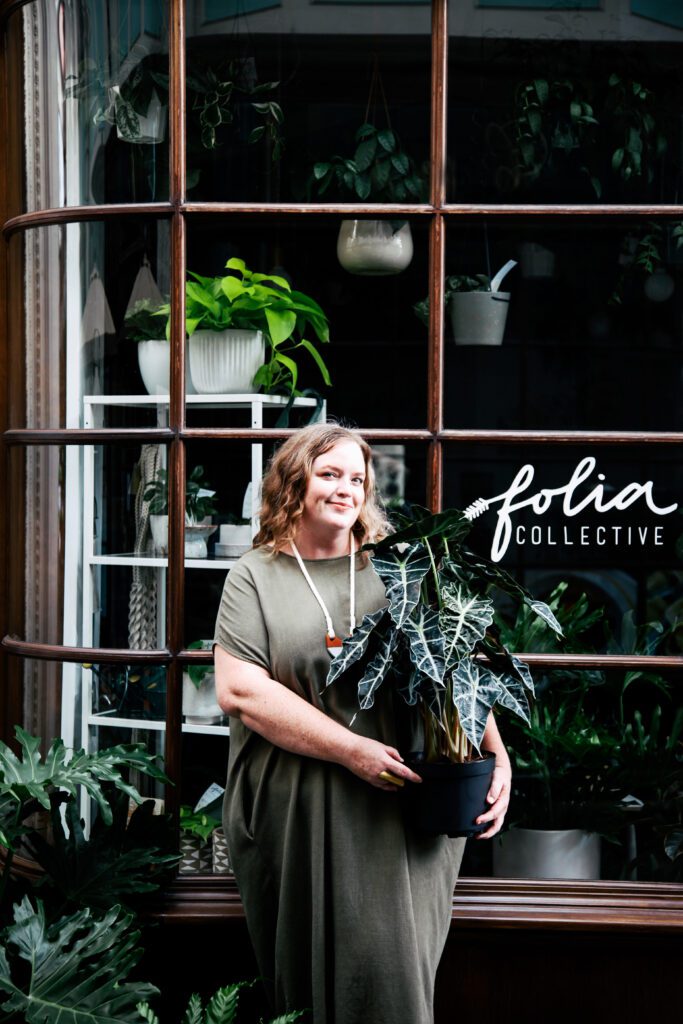
About the author: Danae Horst is the founder of Los Angeles based plant boutique and plant styling studio, Folia Collective. Her life-long love of plants and interior styling, paired with her desire to empower people to keep their plants happy and healthy, led her to start Folia in 2016. In her past work as an interior photo stylist and plant care columnist at the Jungalow, and in the years since starting Folia, Danae has guided tens of thousands of people to the right plants for their space and lifestyle. Danae’s work and plant advice have been featured in the Wallstreet Journal, Washington Post, LA Times, House Beautiful, Better Homes & Gardens, Fine Gardening, and more. The Folia Instagram feed was called a “Plant-Filled Instagram That Will Turn Your Black Thumb Green” by Domino Magazine. Danae’s book, Houseplants For All is available anywhere books are sold. Danae, her husband Bill, and their rescue dog Homer live in a little plant-filled bungalow in Pasadena, California.
READY TO BECOME A CUSTOMER?
A quick and easy registration gives you access to design-forward wholesale decor, wholesale pricing, product details ordering options, and much more! Register now.


COMMENTS ARE OFF THIS POST