
Terrariums are a unique and striking way to keep plants, but their care can seem daunting if you or your customers are used to only keeping plants in pots. Understanding the best way to care for a terrarium will empower you to keep them healthy and see the plants you put in them thrive.

CHOOSE THE RIGHT PLANTS FOR THE TYPE OF TERRARIUM
There are generally two common options when it comes to terrarium styles- closed or open. Choosing the right type for the plants you want to include is one of the most important factors for a healthy terrarium.
Closed Terrarium
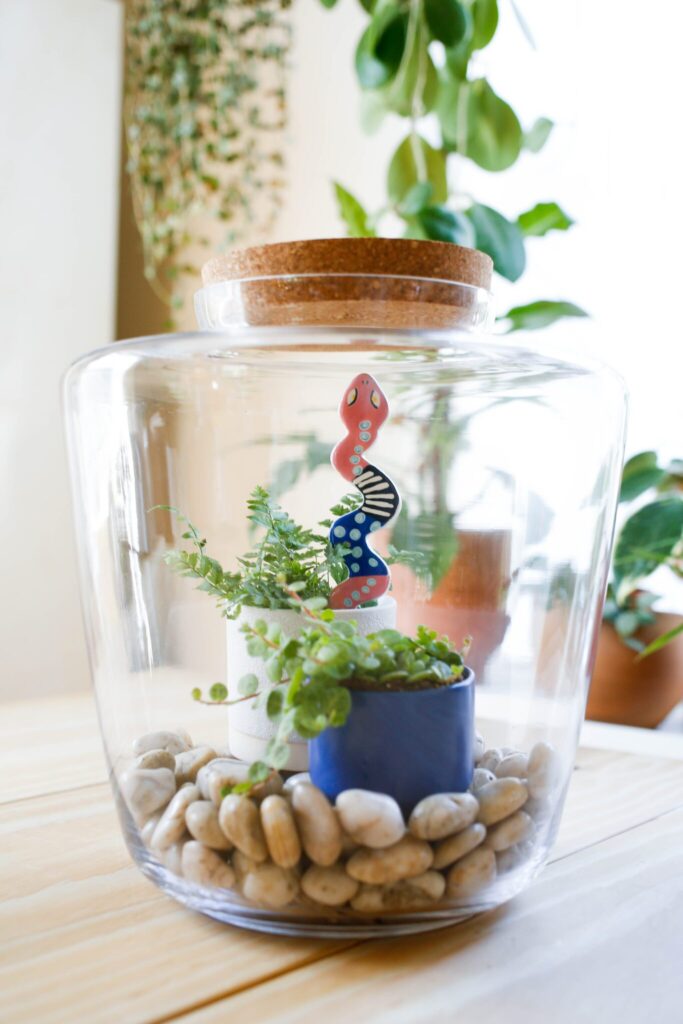
A closed terrarium usually has a lid at the top, or may be a large dome that covers a base for planting in. Because there will be minimal air flow and high humidity in a closed terrarium, this style is best for plants that thrive in high humidity and moist soil, and that won’t grow to be too large. You’ll want to select the smallest plants you can find to prolong the time before you need to prune the plants back to avoid them outgrowing the terrarium.
The best plants for a closed terrarium:
- Ferns
- Fittonia (aka Nerve Plants)
- Begonias (smaller/dwarf varieties)
- Peperomia species (smaller varieties)
- Hypoestes (aka Polka Dot Plants)
- Selaginella (aka Spikemoss)
Open Terrarium
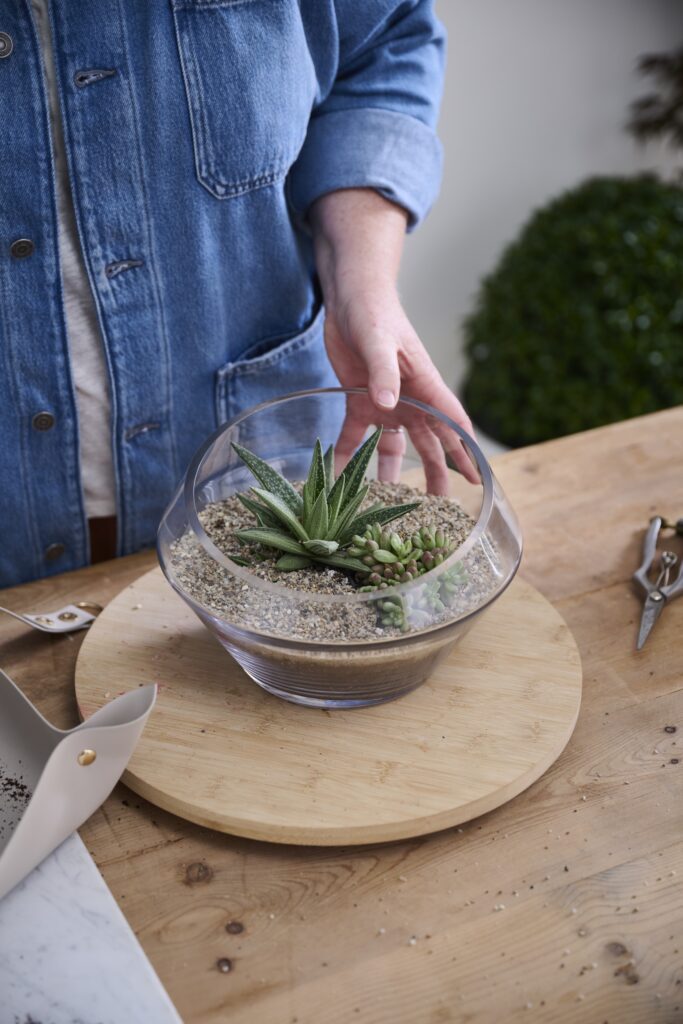
An open terrarium can really be any glass container with a wide opening that is deep enough to plant in. This style of terrarium does not have a lid or cover, which allows for air to flow freely. Open terrariums are ideal for plants that prefer a dry environment or need good airflow. Plant size isn’t as important with an open terrarium, as the plants can just grow out through the opening at the top, but small plants will give you more longevity with your terrarium design.
The best plants for an open terrarium:
- Succulents
- Cacti
CREATE A GOOD FOUNDATION
Because there is no drainage hole in a terrarium, it’s important to create a good foundation of drainage materials and the right potting mix for the type of plants you’re using in your terrarium.
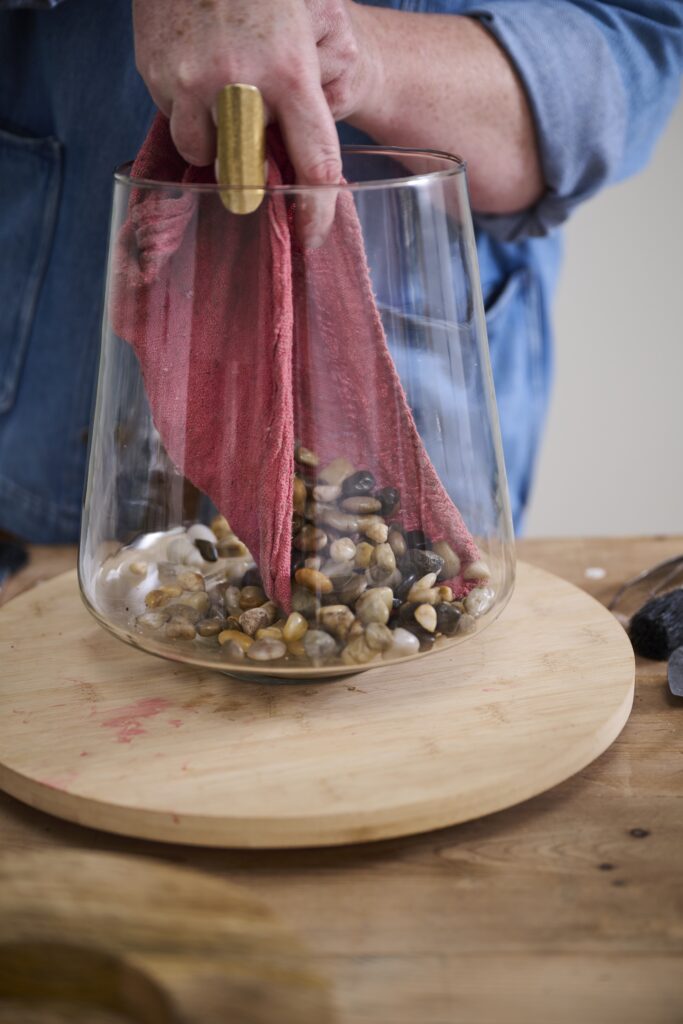
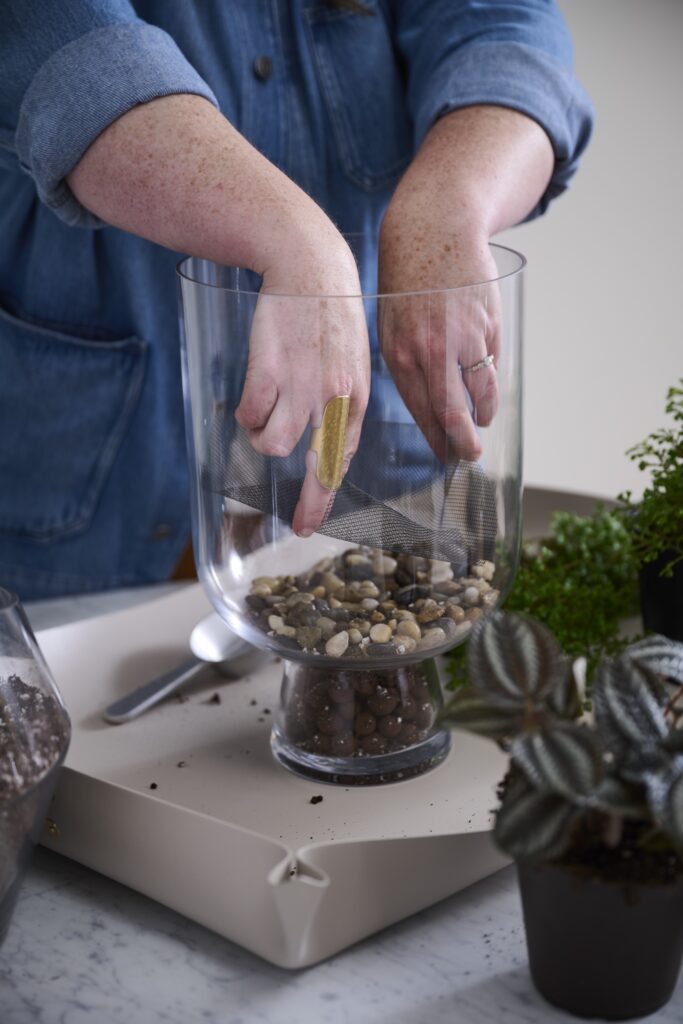
The first layer in any terrarium should be the drainage layer. The best materials for this layer are pebbles, LECA (round clay ‘pebbles’), or lava rock.
Because these materials are larger and sometimes heavy, be sure to carefully place them in your terrarium to avoid damaging the glass. My favorite trick for this is to use a towel to transfer the materials- just load the towel up with the pebbles, etc, then lower it all the way into the terrarium and gently pull it out from under the pebbles.
Depending on the size of the terrarium, you’ll only need 1-3 inches of drainage layer, so don’t overdo it- the thicker the drainage layer, the closer to the top of the terrarium your plants will be, which means they’ll outgrow the terrarium faster.
KEEP YOUR LAYERS SEPARATED
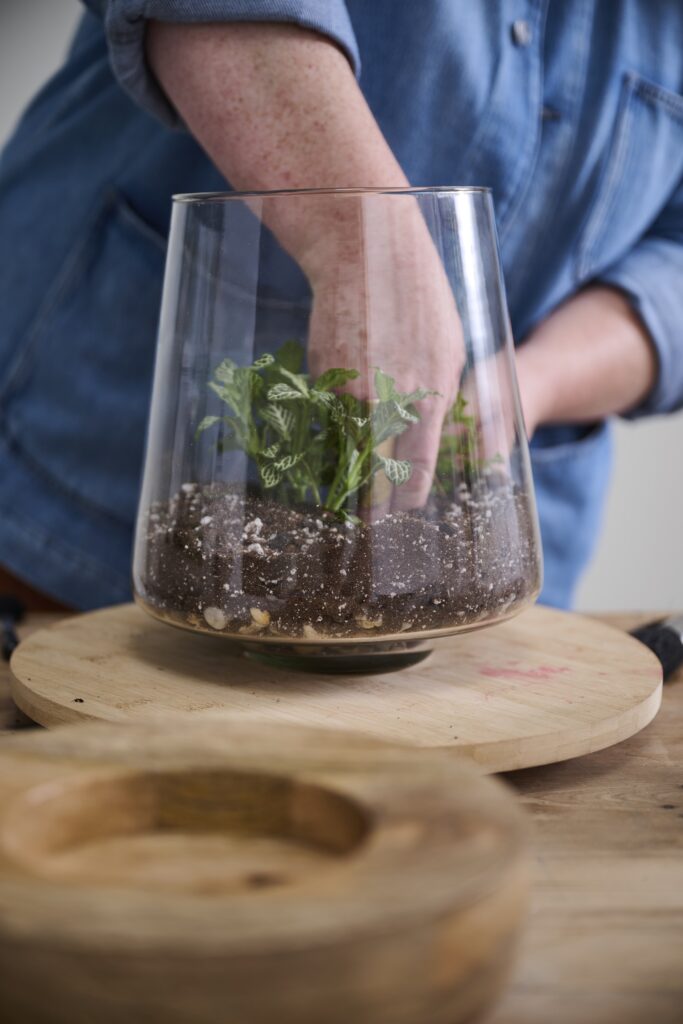
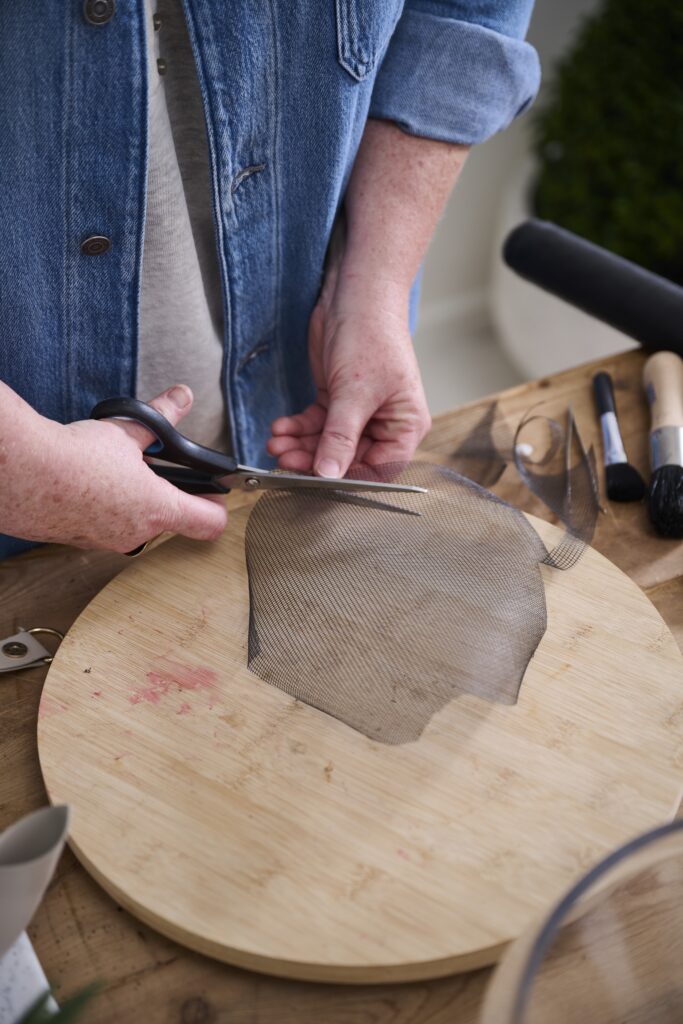
To keep your terrarium looking tidy and maintain the functionality of the drainage layer, you’ll want something that can keep the planting substrate separate from the drainage layer. I find a piece of fiberglass screen (be sure it’s fiberglass, not metal which will rust and eventually break down), cut into a circle that perfectly fits into the terrarium is the easiest way to do this.
This will keep roots from growing into the drainage layer (where they will be constantly wet) and prevent soil from sinking down as well (which looks messy but can contaminate the ‘reservoir’ of water that forms in the drainage layer).
CUSTOMIZE THE ‘SOIL’
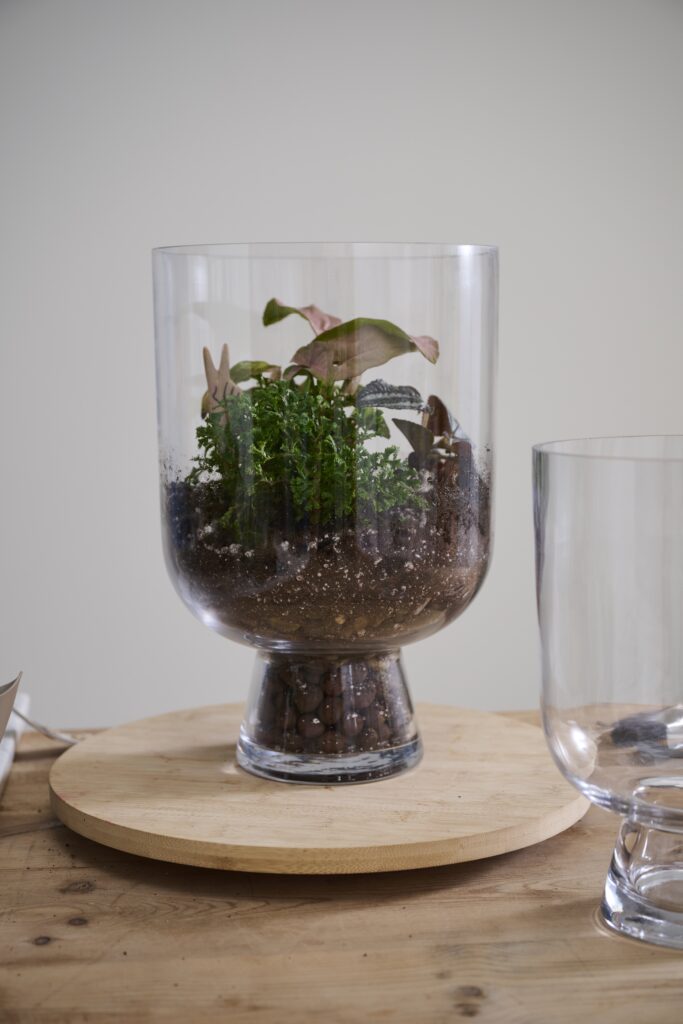
Because of the unique nature of terrariums, using standard potting mix straight out of the bag won’t set your plants up to thrive. Depending on the type of terrarium you’re creating, you’ll want to customize the substrate (a term for the material you’re planting in) to best match the needs of the plants you’re working with.
The best substrate for a closed terrarium:
Because of the high humidity and low airflow in a closed terrarium, you’ll be using tropical plants which prefer a substrate that can retain some moisture, but also is chunky enough for roots to access oxygen and water to flow through. My favorite mix for a closed terrarium contains orchid/fir bark, earthworm castings, coco coir or tree fern fiber, horticultural charcoal, and pumice. However, you can also mix up a good substrate by simply amending an existing high quality potting mix with orchid bark, horticultural charcoal, and pumice, using this recipe:
- 2 parts high quality indoor plant potting mix (not garden soil)
- 1 part orchid bark
- ½ part horticultural charcoal
- ½ part pumice
The best substrate for an open terrarium:
Since you’ll be using plants that typically grow in a drier/desert environment in an open terrarium, the substrate should mimic that growing environment as much as possible, with higher mineral content and allowing water to drain quickly. My favorite open terrarium mix contains orchid/fir bark, earthworm castings, coco coir or tree fern fiber, horticultural charcoal, pumice, and horticultural sand or decomposed granite. Alternatively, you can amend a high-quality cactus/succulent potting mix to create a similar substrate, using this recipe:
- 2 parts high quality cactus/succulent potting mix
- 1 part pumice
- 1 part decomposed granite or horticultural sand
- ½ part horticultural charcoal
KEEP IT TIDY
Over time terrariums, especially closed terrariums will need a little maintenance to both look their best and keep the plants healthy.
Terrarium problems to keep an eye out for:
Dirty Glass: If the glass gets too dirty, plants will receive less light and the risk of mold can increase as well. Use a clean, lint-free towel to wipe both the inside and outside of the glass clean whenever it starts to look dirty (including dust on the outside of the glass). Keep in mind that closed terrariums should have condensation on the inside of the glass for part of the day- this is not the same as dirty glass and condensation should not be removed as it’s part of the natural water cycle that helps keep the plants healthy.
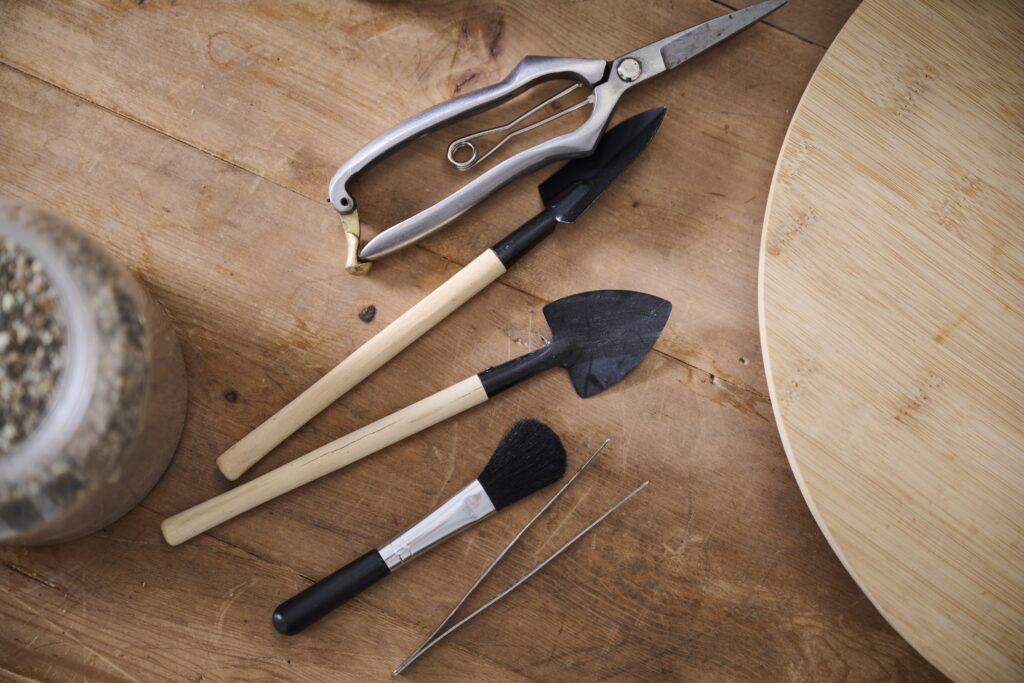
Dying / Dead Plants: If you notice dying plants, the sooner you can remove them the better as the decay process can introduce mold and/or pests into the ecosystem you’re creating in your terrarium. If just a portion of the plant is dying back, you can prune that portion. If the whole plant is dying, use terrarium tools like a mini-trowel, tweezers, or chopsticks to carefully remove and replace the plant.
HYDRATE PROPERLY
Watering a terrarium can be the trickiest part- without anywhere for excess water to go, you need to make sure you’re not adding too much water to the delicate ecosystem in your terrarium.
When and how to water a closed terrarium:
While closed terrariums need more moisture than open ones, the fact the terrarium is closed also means that a natural water cycle can form, meaning that as time goes on you shouldn’t need to add much additional water.
The easiest ways to know if a closed terrarium is ready for water are:
- Dry substrate- if the substrate looks or feels dry, the terrarium needs more water
- No condensation- if the glass does not have condensation inside for at least part of the day (usually the warmest, brightest part of the day), there isn’t enough moisture in your terrarium.
Unless you frequently remove the lid/cover on a closed terrarium, you likely won’t need to water more than 1x a month at the most (some closed terrariums eventually don’t need to be watered at all in fact!).
The best way to water a closed terrarium:
- Use a spray bottle or mister- you don’t want to flood any one area with water, or risk applying more water than your drainage layer can hold, so a spray bottle or mister will help you apply a small amount of water evenly.
- Use the drainage layer to guide you- you never want the excess water in a terrarium to rise above the top of the drainage layer, since the water will then start to oversaturate the substrate.
- Distilled or deionized water is best for terrariums, as the mineral salts in tap water can build up on the glass and form a white crusty layer that doesn’t look good.
When and how to water an open terrarium:
Open terrariums won’t develop their own water cycle like closed ones do, so the water you apply is the only access the plants will have to water. However, because the plants suitable for an open terrarium prefer to have time to dry out thoroughly in between waterings, you need to use caution when you water.
The easiest ways to tell if your closed terrarium is ready for water are:
- Check the substrate- it should be dry at least ⅔ of the way down between waterings.
- Monitor plants- succulents and cacti typically start to look a bit wrinkled or pruney when they’re too dry, if you notice this, it’s definitely time for water.
The best way to water an open terrarium:
- Use a small spoon to apply water- unless the substrate is extremely dried out, it’s best to only apply water near the base of each plant. Use 1-3 spoonfuls of water, ensuring the water is applied evenly around the entire base of the plant.
- Use the drainage layer to guide you- in an open terrarium with desert plants, the drainage layer should always be mostly dry- if you notice a lot of water in the drainage layer, you’ve been either watering too often, or using too much water when you do. Hold off on watering until the drainage layer is dry and the substrate is dry at least ⅔ of the way down.
- Distilled or deionized water is best for terrariums, as the mineral salts in tap water can build up on the glass and form a white crusty layer that looks unappealing
FIND YOUR LIGHT
As always, making sure your plants are getting enough of the right kind of light is essential to their long-term health, even when it comes to terrariums.
The best light for terrarium plants:
Closed terrariums should be kept in the type of light that best matches the type of plants you’ve used- most commonly bright indirect light or sometimes medium light.
Avoid any direct sun with closed terrariums as the glass can magnify the sun and cause plants to burn.
Open terrariums, as long as you’ve used cacti or succulents, can usually take some direct sun, as long as it’s not too intense, or coming in through the glass sides of the terrariums. The more light cacti and succulents can get indoors the better- if plants seem to be stretching out a lot, they probably need more light.
If you’re keeping an open terrarium outdoors, an area that gets only morning sun or dappled light will be best.
HAVE FUN
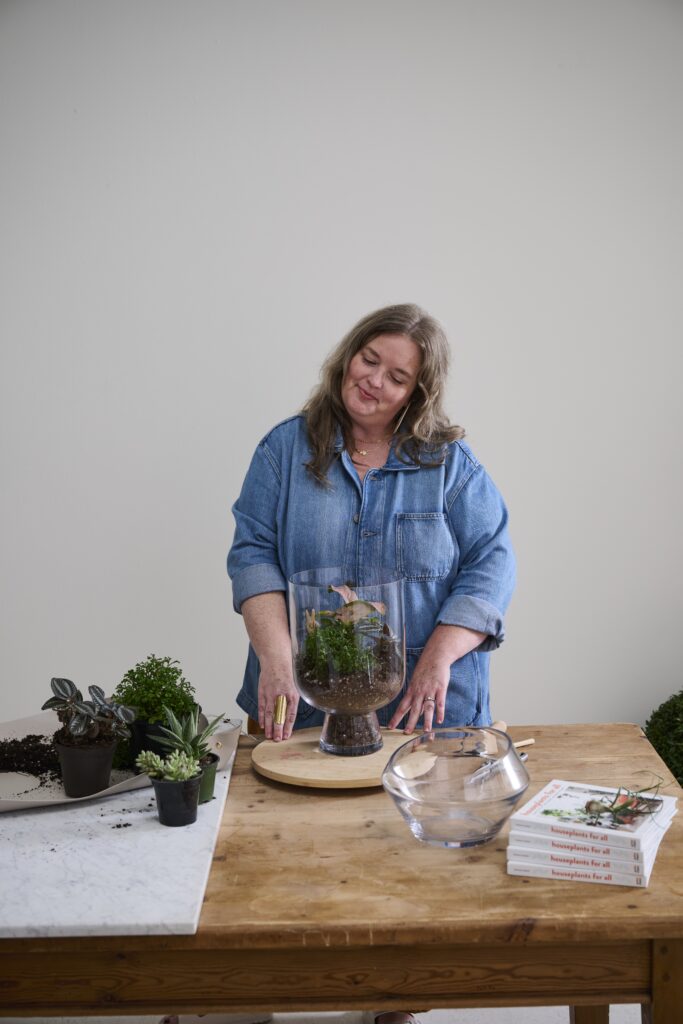
Though terrarium care can have a bit of a learning curve compared with potted plants, it’s also a unique and fun way to grow plants! Use playful accessories like plant sticks, driftwood, crystals, or decorative stones to add an extra layer of personality to a terrarium.
To shop Accent Decor’s wholesale decor and bulk terrarium containers including all new and flower, plant and home products, visit accentdecor.com.
About the author: Danae Horst is the founder of Los Angeles based plant boutique and plant styling studio, Folia Collective. Her life-long love of plants and interior styling, paired with her desire to empower people to keep their plants happy and healthy, led her to start Folia in 2016. In her past work as an interior photo stylist and plant care columnist at the Jungalow, and in the years since starting Folia, Danae has guided tens of thousands of people to the right plants for their space and lifestyle. Danae’s work and plant advice have been featured in the Wallstreet Journal, Washington Post, LA Times, House Beautiful, Better Homes & Gardens, Fine Gardening, and more. The Folia Instagram feed was called a “Plant-Filled Instagram That Will Turn Your Black Thumb Green” by Domino Magazine. Danae’s book, Houseplants For All is available anywhere books are sold. Danae, her husband Bill, and their rescue dog Homer live in a little plant-filled bungalow in Pasadena, California.
READY TO BECOME A CUSTOMER?
A quick and easy registration gives you access to design-forward wholesale decor, wholesale pricing, product details ordering options, and much more! Register now.

COMMENTS ARE OFF THIS POST