
Accent Decor’s Resident Plant Expert, Danae Horst, offers her plant care guidance on the do’s and don’ts of light levels for houseplants. Read on for expert tips to ensure your plants are happy and healthy.
Light is the most misunderstood aspect of plant care, but it is also the most important. Understanding questions like “How much light do my plants need?” or “What does ‘bright indirect light’ mean?” is essential to keeping your plants healthy and giving them their best life. My top houseplant light do’s and don’t’s give you the knowledge you need to ensure every plant gets the right light for its needs.
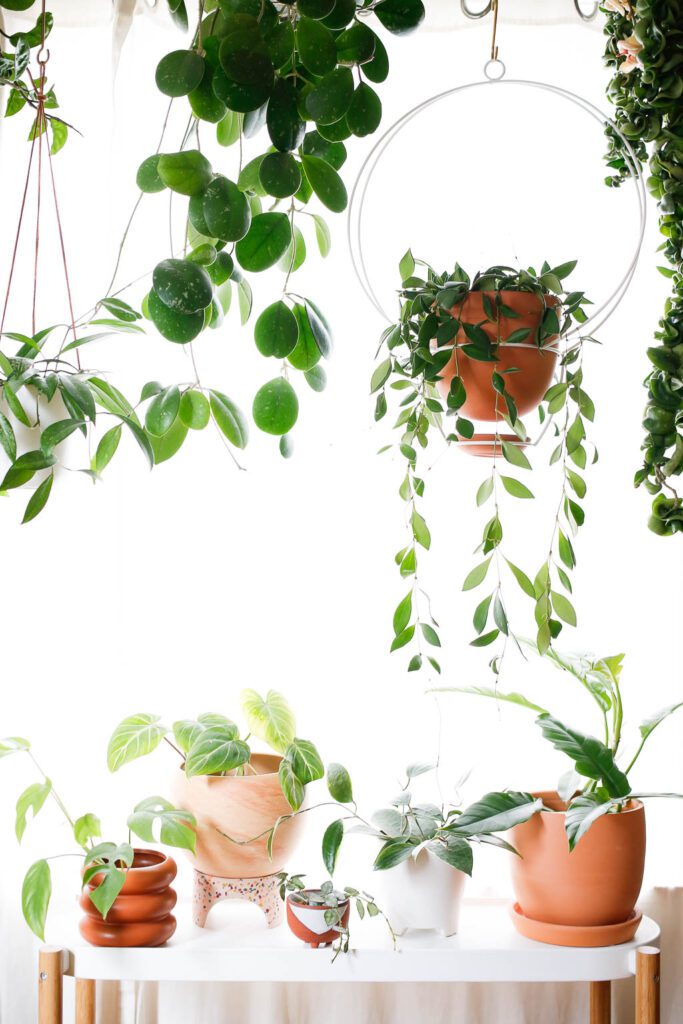
DON’T count on your eyes alone to tell you there’s enough light for plants.
DO understand light factors like the direction a window faces, how large the window is, and what obstacles may be blocking light.
Because our human eyes are good at adjusting to lower light levels, it can be easy to look at a room and think it’s bright. However, if you used a light meter, you’d see that there is objectively more light right in front of a window than there is next to, under, or across the room from a window. You’d also discover that (in the northern hemisphere) a window that faces south or west is brighter than one that faces east and much brighter than one that faces north. However, if you do have windows with brighter exposures like south or west but have dark window treatments or a large tree right outside the window, then you’ll actually have low light levels as far as your plants are concerned. There are many factors that affect how bright a particular area in your home may be, but generally, if you follow these two guidelines, you can ensure your plants are getting enough light:
- Place your plants in the path of the light, directly in front of the window, not next to, below, around the corner, or across the room from the window.
- Don’t place plants further than about 4 feet from a window. The brighter the exposure, and the larger the window, the farther you can place a plant, but anything beyond 6 feet or so will usually be relatively low light.
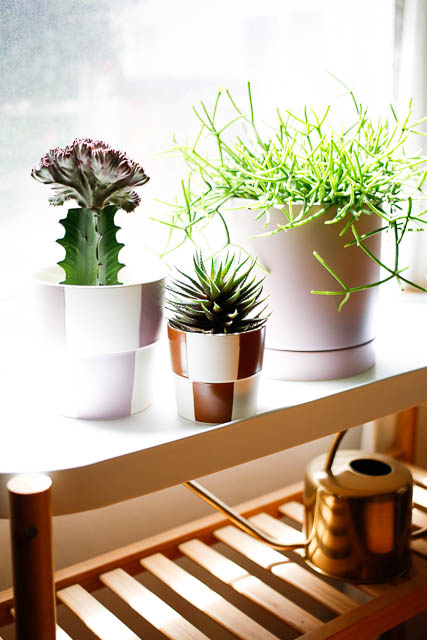
DON’T assume that houseplants don’t need lots of light because they’re ‘indoor’ plants.
DO remember that all plants, even those we keep as houseplants, naturally live in much brighter conditions than most areas in our homes.
If you used a light meter outside and then compared it to the light inside, you may be surprised to discover that even a fully shaded area outside can be about as bright as the brightest window you have inside. While many of the tropical plants we keep as houseplants live in full shade in the wild, in our homes, they will need the brightest indirect light you have in your home to thrive. There are a few plant species that can tolerate lower light, but all tropical plants will do best in bright light and plants that live in full sun in the wild (like cacti and many succulents) must have direct sun indoors.
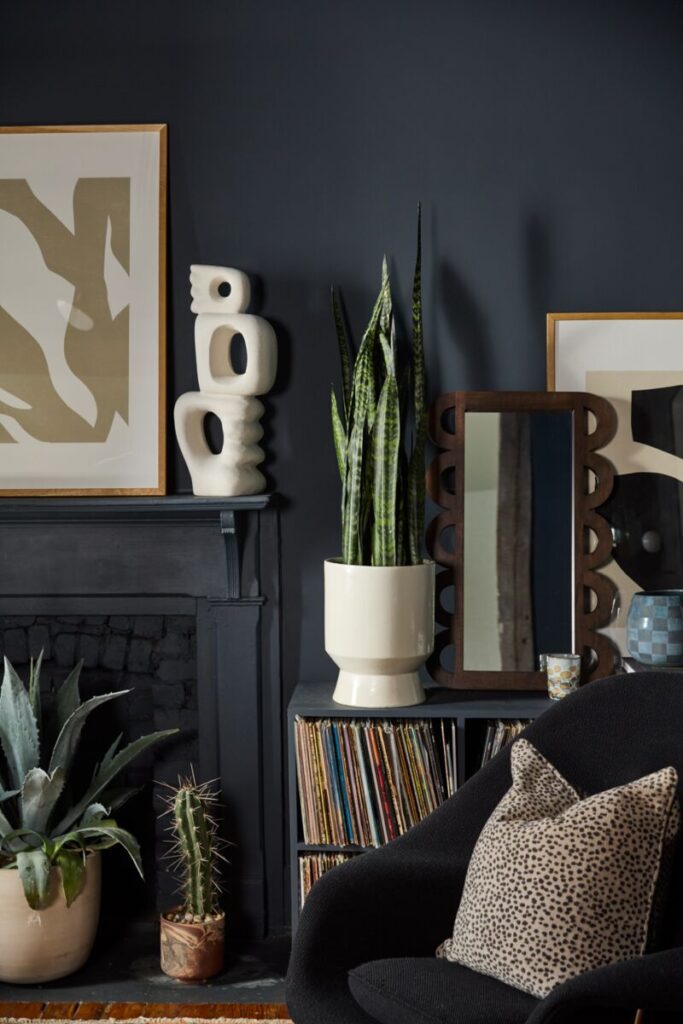
DON’T think that ‘low light’ means no light.
DO recognize that even the plants that will tolerate low light still need light to survive and that plants kept in low light are not genuinely getting enough light to thrive.
While some plants are marketed as ‘low light,’ all this really means is that the plant can tolerate low light, not that low light is where it will grow best or that it will be able to survive long-term in low light. Because plants must photosynthesize to produce energy for life and need light in order to photosynthesize, all plants absolutely need some amount of natural light (or a supplemental grow light) in order to survive at all. You’ll notice that plants kept in low light (even if they’re a ‘low light’ plant) usually lose quite a few leaves and have more stretched-out-looking stems than the same plant in a brighter spot does. Leaf loss happens as the plant attempts to balance the resources available (via light) with the number of leaves those resources can support, while the stretching of stems (often referred to as etiolation) is due to an attempt to ‘reach’ more light. Both symptoms are a sign that your plant has spent too much time in low light.
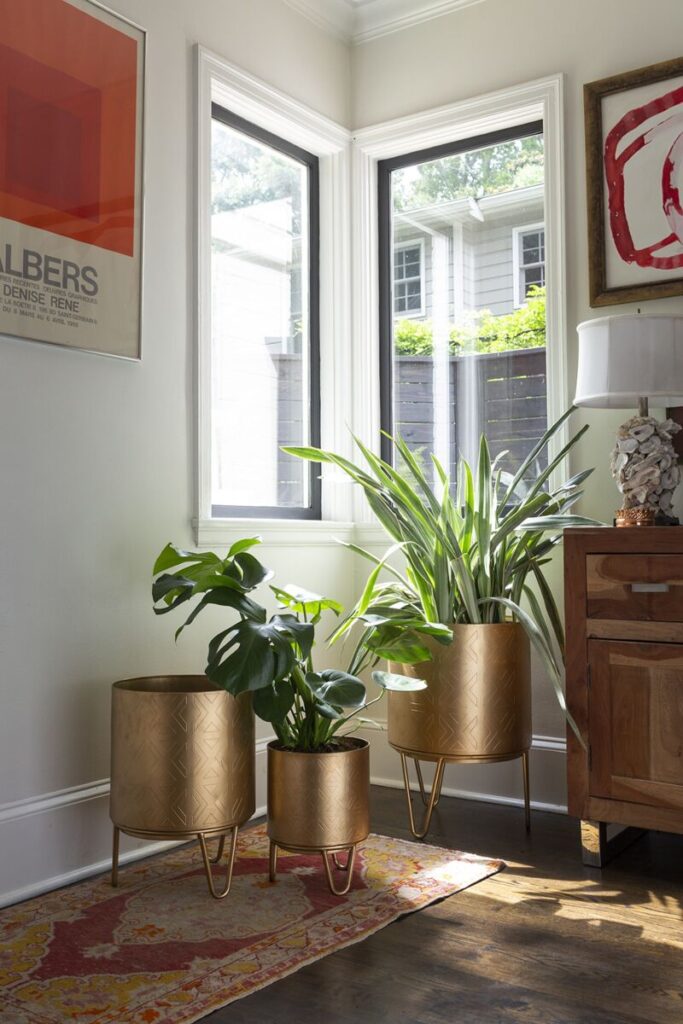
DON’T place plants in a room based solely on aesthetics.
DO consider both the needs of the plant and how it will look when deciding where to place a plant or designing a room around plants.
One of the most common mistakes I see when it comes to choosing where to place plants is making the decision based only on how a plant looks in a particular spot. This is, of course, understandable- sometimes a corner is just perfect for a big tree, or a long trailing plant would look amazing on a big bookshelf- but if you don’t factor in the needs of the plant as well, you’re just going to end up with a dead plant- which is never a good look. If you really want a tree in a room, consider how you might rearrange the room so that the tree can be in front of the window or under a skylight. If you’re designing a room from scratch, keep plants in mind from the start and ensure that window (if you’re remodeling or building) and furniture placement allow room for plants in the places they’ll thrive.
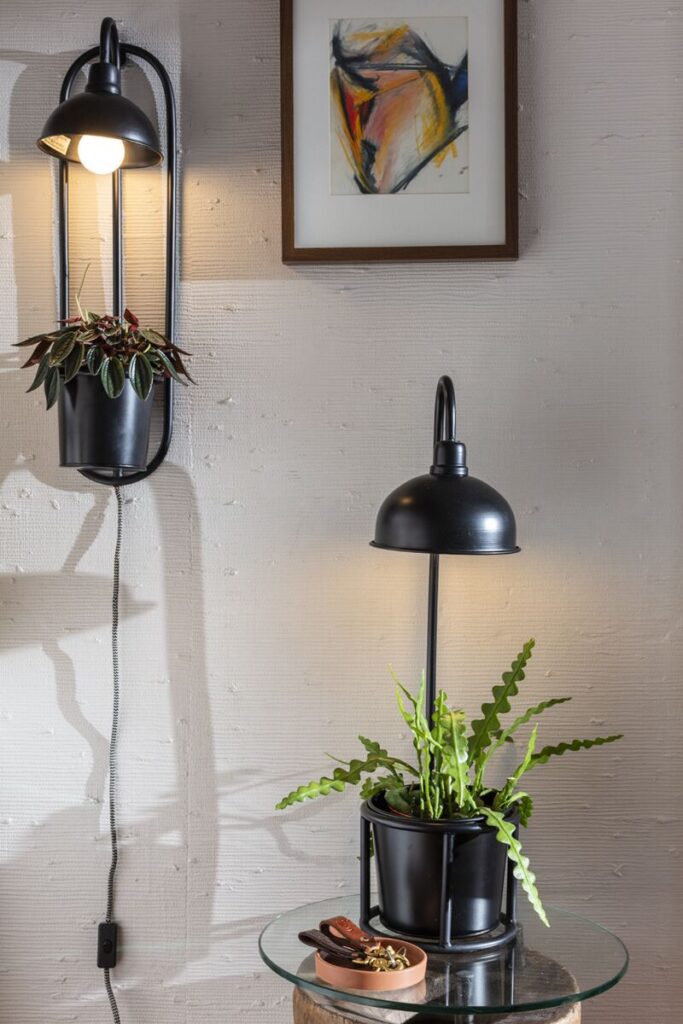
DON’T count on regular lightbulbs to provide the light plants need.
DO use grow lights to supplement plants living in spots that don’t get enough natural light.
There is often a misconception that a regular lightbulb can provide the kind of light a plant needs, but only light specifically made for growing plants has the full spectrum of light required for photosynthesis. The good news is that grow lights have vastly improved in style recently and there are many options that can blend in with any decor seamlessly (including grow light bulbs that can be screwed into most lamps). There’s a range of quality in grow lights, so if you’re trying to supplement light for a number of plants or a large plant like a tree, be sure to choose a high-quality grow light that’s strong enough to benefit the plant and follow any included instructions on the correct distance from the plants to place the grow light (which can also change depending on the light needs of the plant).
Understanding light as it relates to plants can be tricky, but these tips will help you ensure your plants are getting enough light to thrive. If you’re interested in learning more about light and the best plants for sunny, bright, or lower-light rooms, check out my post on Indoor Plants and Their Environment.
To shop Accent Decor’s wholesale pots and planters and wholesale decor including all new and flower, plant and home products, visit accentdecor.com.
About the author: Danae Horst is the founder of Los Angeles based plant boutique and plant styling studio, Folia Collective. Her life-long love of plants and interior styling, paired with her desire to empower people to keep their plants happy and healthy, led her to start Folia in 2016. In her past work as an interior photo stylist and plant care columnist at the Jungalow, and in the years since starting Folia, Danae has guided tens of thousands of people to the right plants for their space and lifestyle. Danae’s work and plant advice have been featured in the Wallstreet Journal, Washington Post, LA Times, House Beautiful, Better Homes & Gardens, Fine Gardening, and more. The Folia Instagram feed was called a “Plant-Filled Instagram That Will Turn Your Black Thumb Green” by Domino Magazine. Danae’s book, Houseplants For All is available anywhere books are sold. Danae, her husband Bill, and their rescue dog Homer live in a little plant-filled bungalow in Pasadena, California.
READY TO BECOME A CUSTOMER?
A quick and easy registration gives you access to design-forward wholesale decor, wholesale pricing, product details ordering options, and much more! Register now.


COMMENTS ARE OFF THIS POST