
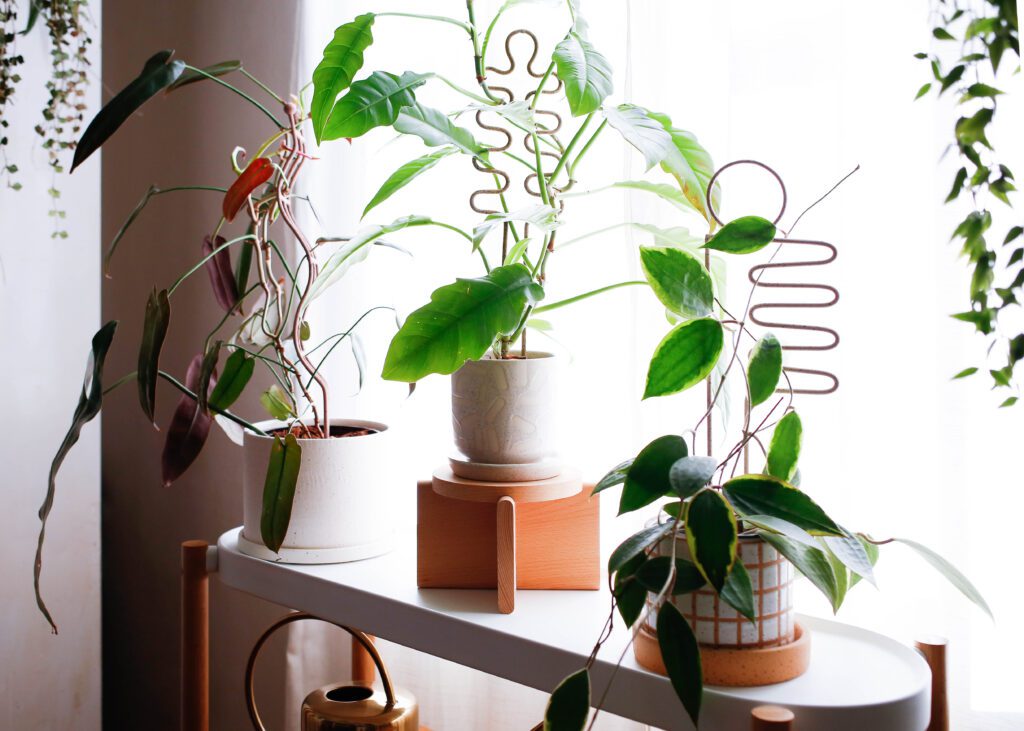
If you’ve seen one of these and thought, “This is cute, but what do I do with it?”, you’re not alone. However, plant supports like plant sticks and trellises aren’t just for looks and can be a very useful way to wrangle unruly plants, add height to a plant grouping, or give a lanky plant a little added support. They’re not difficult to use, but understanding when to use them, and pairing them with the right plants will give you the best success with them and prevent any damage to your plants.
WHEN TO USE PLANT STICKS & TRELLISES
Plant sticks and trellises can be used to support various plants but should not be confused with other plant supports like moss poles or unfinished wooden planks. Moss poles (or coco coir poles, when they’re made from coco coir material instead of sphagnum moss) and wooden planks are meant to mimic the texture of tree trunks and branches that plants in the wild use to climb and are ideal for plants that do best when allowed to climb. Many plants, like Monsteras, Epipremnums, Rhaphidorphoras, and some Philodendron species, must have something like a moss pole to climb in order to reach their more mature state, where their leaves take on a new shape compared with the juvenile leaves they usually have when you see them in stores. Moss poles and planks usually need to be kept moist for the plants growing on them to attach their aerial roots, which they use to affix themselves and continue climbing upwards.
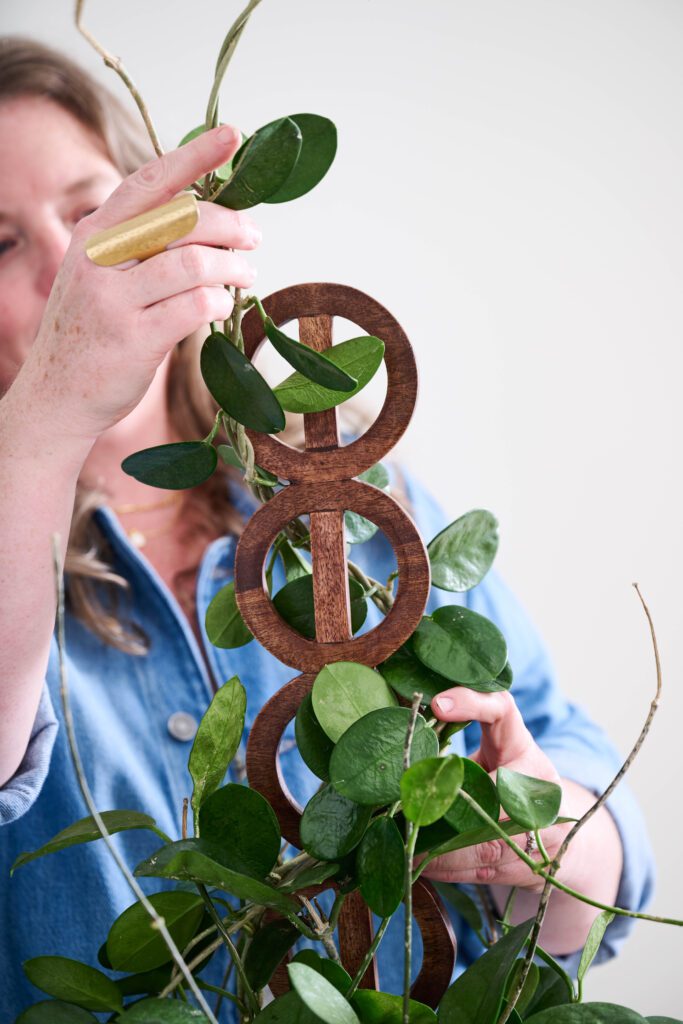
Unlike moss poles and wooden planks, plant sticks and trellises don’t usually have a rough texture and cannot be kept moist. They are most useful for plants that can climb anything or even plants that aren’t climbers but just need a little extra support. You can weave the stems and leaves of your plant through the openings of the plant stick or trellis to add support. (You can also tie the stems on if needed).
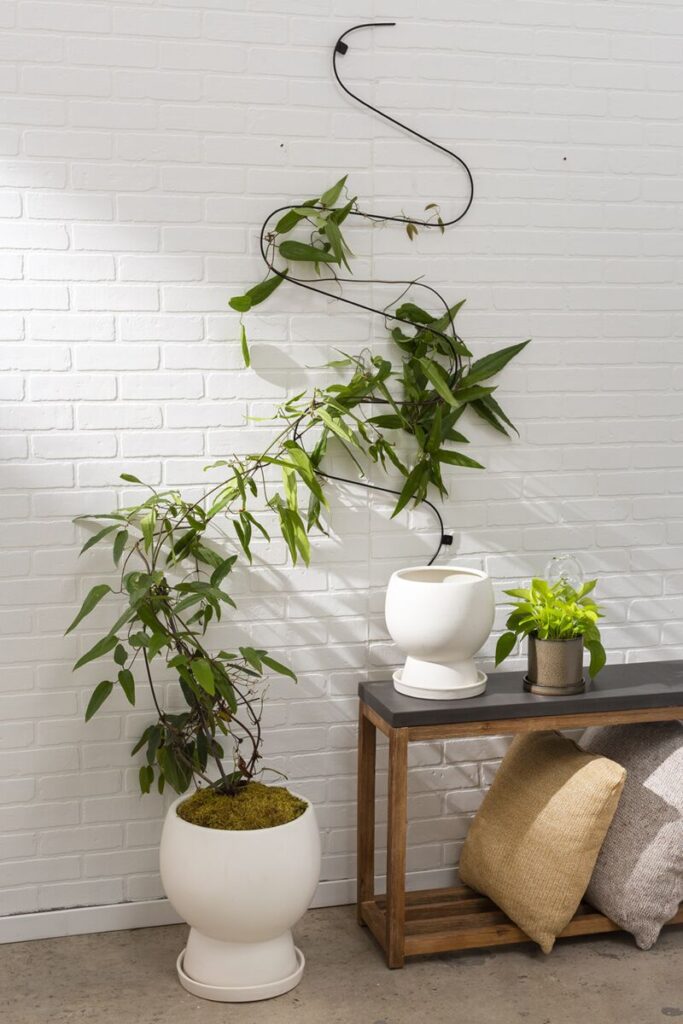
Plant sticks are inserted directly into the pot, while trellises are typically installed on the wall behind the pot. Be sure to choose a style that’s the correct size for the plant you plan to attach to the support.
THE BEST PLANTS TO USE WITH PLANT STICKS & TRELLISES
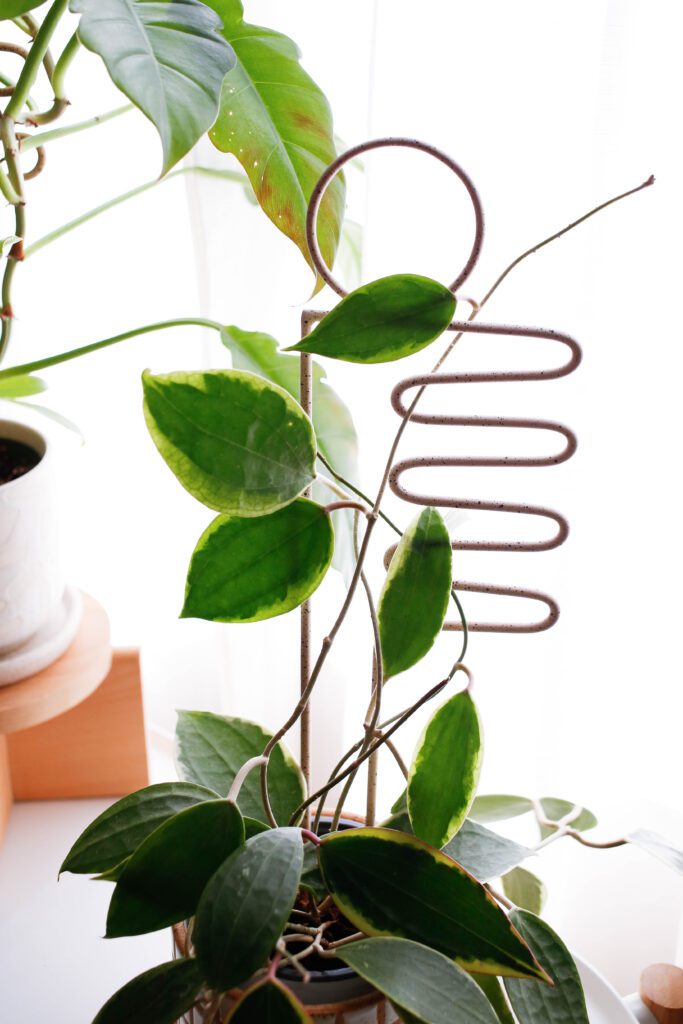
Any plant with a flexible enough stem that you’d like to look more upright can be paired with a plant support, but depending on your support’s shape, certain plants may work better than others. Plant sticks are often smaller in size than trellises, so they are a good choice for slow-growing, younger, or smaller houseplants. Trellises are usually a good fit for either fast-growing, larger, or longer houseplants or climbing plants grown outdoors. Below is a breakdown of some of the pairings I find work well, though matching the size of the plant to the size of the support is also a good guide.
Plant Stick
Hoyas
Philodendrons (many species)
Tradescantia
Peperomia (many species)
Scindapsus (if you aren’t trying to encourage shingling)
Monstera (vining species)
Trellis
Ivy
Epipremnum (if you’re not trying to get a more mature leaf form)
Syngonium (if you’re not trying to get a more mature leaf form)
Rhaphidophora (though you may not get the more mature leaf form)
Star Jasmine
Clematis
Passionflower
Bougainvillea
Sweet Pea
TIPS ON INSTALLING PLANT STICKS OR TRELLISES
– When you insert the support into the soil, try to choose an area where the roots haven’t fully filled the pot (it’s often easiest to add a plant support when you’ve just repotted your plant, for maximum room). Insert the support as gently as possible. If you feel major resistance, reposition slightly to avoid pushing the support through any major roots.
– Choose plants with flexible stems and if you feel resistance as you try to weave in or attach the stem to the support, don’t force it. Always try to bend the stems in the direction they’re already growing to prevent damage.
– If your plant outgrows the support, you can either prune it back to the point at which it fits the support, or gently remove the plant from the support, and add a new, larger support.
– Whether you want to see your plant climb a wall or have one that just needs something to lean on, plant sticks and trellises are a cute and useful way to add support to any plant.
To shop Accent Decor’s wholesale pots and planters and trellises for pots including all new and flower, plant and home products, visit accentdecor.com.
About the author: Danae Horst is the founder of Los Angeles based plant boutique and plant styling studio, Folia Collective. Her life-long love of plants and interior styling, paired with her desire to empower people to keep their plants happy and healthy, led her to start Folia in 2016. In her past work as an interior photo stylist and plant care columnist at the Jungalow, and in the years since starting Folia, Danae has guided tens of thousands of people to the right plants for their space and lifestyle. Danae’s work and plant advice have been featured in the Wallstreet Journal, Washington Post, LA Times, House Beautiful, Better Homes & Gardens, Fine Gardening, and more. The Folia Instagram feed was called a “Plant-Filled Instagram That Will Turn Your Black Thumb Green” by Domino Magazine. Danae’s book, Houseplants For All is available anywhere books are sold. Danae, her husband Bill, and their rescue dog Homer live in a little plant-filled bungalow in Pasadena, California.
READY TO BECOME A CUSTOMER?
A quick and easy registration gives you access to design-forward wholesale decor, wholesale pricing, product details ordering options, and much more! Register now.


COMMENTS ARE OFF THIS POST